

In the May edition of “Technically Speaking” released by the Market Technicians association there was an interesting reprint of a blog post written by Tucker Balch entitled “9 Mistakes Quants Make that Cause Backtests to Lie”. The post is clear and concise and provides an excellent roadmap that aspiring quants …
Month: May 2017

Before we discuss methods to exploit the tendency for the stock market to rise during month end, I wanted to share the performance of simply implementing the strategy in its raw form against its inverse. The results are rather impressive. EOM Strategy vs EOM Inverse Strategy Performance For the test …

We’ve investigated the best-day-of-the-week and the best-day-of-the-month, so I thought my series wouldn’t be complete without taking a look at the best-month-of-the-year. For the test I simply computed the average return for each month of the year across every liquid stock listed on the JSE since 2003 till the present …

I’ve seen studies in the past that suggest that there’s an optimal day of the week to trade. One well know trader in particular, Larry Williams (famous for trading $10K to $1.1 mill in a single year with real funds in a global trading competition) , discusses “best-day-of-the-week” as a …

Last week we explored the “best-day-of-the-week” theory and found no significant evidence to suggest that there is an optimal day of the week to trade. This week I’m going to test the theory that there is an optimal time of month to trade, and as you shall soon learn, things …

In my post “Engineering a Synthetic Volatility Index” I discussed a technique that I’ve developed to monitor broad market volatility with a Synthetic Volatility Index. Today I’m going to quantify our index by applying it to a liquid universe of equities as a simple entry filter. If volatility indeed has an …

I employ volatility analysis extensively in the hedge fund I manage both at the individual stock level and at the index level. Both types of analysis are essential if you hope to trade successfully, so in today’s blog I’m going to discuss each of them. Index volatility will however form …
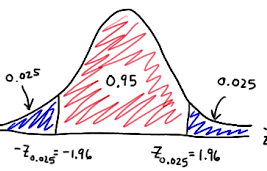
Last year Rowan spoke about the importance of consistency in portfolio construction and today I’d like to expand on the concept a little. There are a number of reasons why consistency is important: 1) our performance pegged pricing structure is based on consistency 2) it’s psychologically easier to trade consistent …

Trading is difficult because we’re all burdened with emotional challenges. It doesn’t matter how effective your strategy or statistically significant your testing, every strategy will experience drawdown and losing runs. It’s how we respond to those inevitable losses that determines whether or not we’ll be successful in the long-term. In …
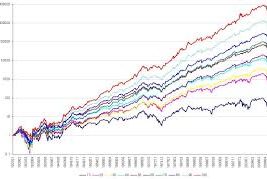
I’ve been doing some research around something called External Relative Strength (ERS). ERS measures the stock’s price performance relative to all other listed equities. Basically, it measures how well or poorly a stock is performing relative to its’ peers. Our research suggests that the market has a strong propensity to …